There are still a great many scooters here but not as many as in Ho chi Min yesterday. There are no rules on the road, that I can detect, except that everyone seems to move calmly and quite slowly at key points like roundabouts, cross roads etc. somehow they just seem to miss each other. This method of driving quite interested me. Strangely ( for those who know how much I don't really like driving) this quite appealed to me!
Tuesday, 17 December 2013
Na Trang - Vietnam
We are in port at Na Trang. Population 300,00 and according to our guide, Kim, most people work in The tourist industry here. Beautiful beaches, mountains, fishing port... And some temples. It used to be a collection of small fishing villages but was developed in the French colonial period and has continued growing since.

Monday, 16 December 2013
Water puppets - operated by people standing in the water and manipulating puppets with sticks
Puppet show at the History Museum, Ho Chi Minh City, Vietnam

Dragons

Catching fish

Fishermen and cat that was fishing but retreated up the bamboo 'tree'

The puppeteers
These photos give a small idea of what's involved. I'll add a video clip or two when I have access to free wifi. The satellite wifi is very uncertain and suddenly cuts out without warning. The minutes just zoom by....
Very short video clips taken by my father... his first ever, I think.
Ho Chi Min City
Inside the central post office - French Colonial architecture, designed by Gustav Eiffel


 |
| Street scene in Ho Chi Minh City |
 |
| Notre Dame Cathedral in Ho Chi Minh City |
 |
| Inside the Post office in Ho Chi Minh City The Legacy of the French Colonial rule Our guide told us that the main legacy was architecture, coffee and baguettes. Economic capital He said that the economic capital, Ho Chi Minh City, had a range of industries including seafood processing, garments, wooden furniture, rice, leather, animal feed, coffee. We saw that there were plenty of places to drink coffee in the city. Apparently it's the second largest coffee bean producer in the world after Brazil. On the road into the city we saw fresh water prawn and also fish farms - catfish I think. A large number of egrets had also discovered this and were busy fishing. In a market in Vietnam I saw some beautifully made, padded down jackets in a wide variety of colours for less than $20. I have seen very similar, if not identical jackets, branded O'Neil, for £100 in Britain. the label inside said, 'Made in Vietnam'. |
Presidential Palace in Saigon - later re-named Reunification Palace, Ho Chi Minh City. Vietnam
Inside the palace


Basement corridors where the President and team were based to command the war.
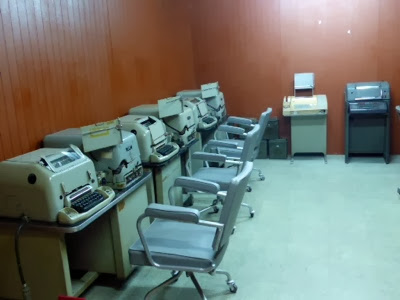
Communications centre - telex machines


President's bed in the intelligence, Command Centre

Ho Chi Minh City (Saigon) - Vietnam
Centre of Ho Chi Minh City
Wide, tree lined boulvards decorated with flower sculptures. I got the impression of a busy, but clean, spacious city centre.
Wide, tree lined boulvards decorated with flower sculptures. I got the impression of a busy, but clean, spacious city centre.


1960s architecture - Presidential Palace
Fall of Saigon or National Reunification Day, 30 April 1975 - tanks. helicopters
The actual tanks that were seen in the news footage at the key point in the Vietnam war when the North Vietnamese troops broke through the gates of the Presidential Palace in Saigon (now Ho Chi Minh City).


Helicopters used in evacuation of Saigon, famously from the roof of the American Embassy
Saigon Presidential Palace - now Reunification Palace Ho Chi Min City
Presidential/Reunification Palace
 |
| The Palace gates - famously stormed by North Vietnamese tanks at the end of the Vietnam War |

Outside the palace - note the 60s architecture (of the palace, not me!)

Rex Hotel - famous in Vietnam War as location of American military 5pm daily conference (known as '5 o'clock Follies'), US military personnel billet and popular rooftop bar for GIs and war correspondents.
Subscribe to:
Posts (Atom)